

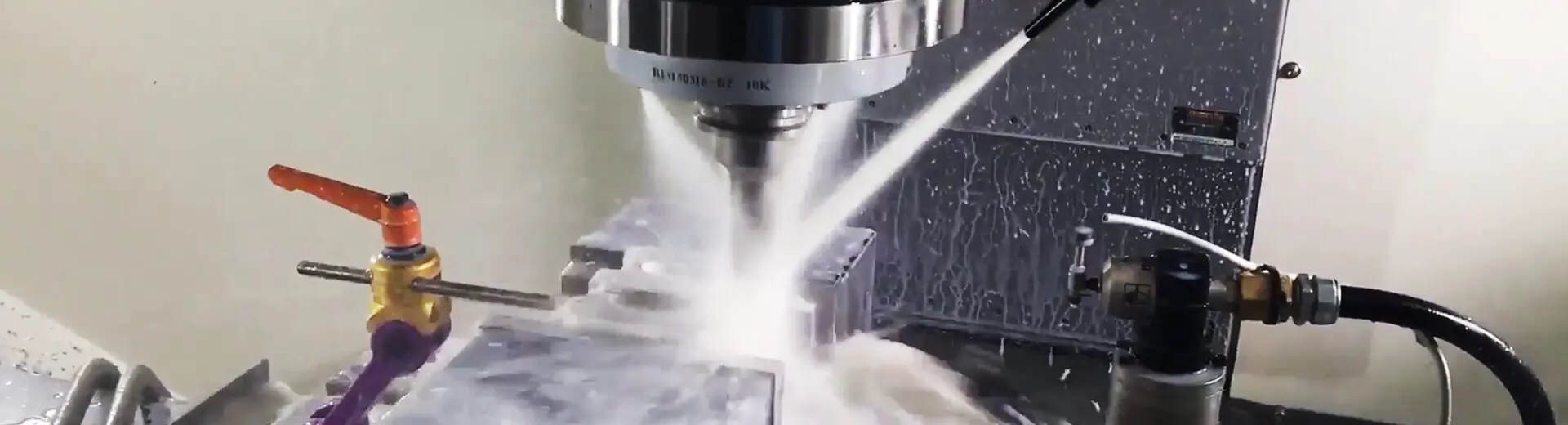

Understanding Hydraulic Vise: Working Principle and Advantages
 During machining, workpieces endure cutting forces, vibration, and heat that can cause them to shift. Even slight movement leads to dimensional errors, surface defects, tool damage, or safety hazards, making steady workholding essential for precision and efficiency.
While traditional mechanical vises feature a simple structure, they often fall short in terms of clamping force stability, repeatability, and ease of operation, especially as precision requirements continue to increase.
As a result, hydraulic vises have become a preferred workholding solution for many machine shops. This article will explain what a hydraulic vise is, how it works, and its key advantages. It will also cover common applications and frequently asked questions, helping you quickly determine whether a hydraulic vise is suitable for your machining needs.
What Is a Hydraulic Vise?
Definition and Structure
A hydraulic vise is a workholding device that generates clamping force through a hydraulic system. Its core components typically include the vise body, a movable jaw, a fixed jaw, and an internal hydraulic mechanism. During operation, the hydraulic system (a system that uses oil pressure to multiply force) enables the jaws to produce strong and evenly distributed clamping force within a short time. This not only secures the workpiece effectively but also reduces errors caused by manual operation, ensuring consistent clamping conditions for every setup.
Differences Between Hydraulic Vise and Traditional Mechanical Vise
The primary difference between hydraulic vises and traditional mechanical vises lies in the source of clamping force and the method of operation.
Hydraulic vises use a hydraulic system to generate clamping force, providing strong and consistent holding power. This makes them well suited for heavy cutting operations or long machining cycles. In contrast, traditional mechanical vises rely on manually turning a lead screw to clamp the workpiece. Their clamping force is generally lower and more susceptible to variation due to differences in operator input, which is why they are commonly used for general machining or applications with lower precision requirements.
Importance
As machining precision and automation demands continue to rise, hydraulic vises have become indispensable clamping tools in modern machining centers and CNC machinery. Steady clamping force not only reduces machining vibration and improves processing quality but also helps shorten workpiece changeover time, further enhancing overall production efficiency.
How Does a Hydraulic Vise Work?
The operating principle of a hydraulic vise is based on Pascal’s Law. According to this law, when pressure is applied to a confined fluid, it is transmitted equally and without loss in all directions. A hydraulic vise takes advantage of the incompressible nature of hydraulic oil to amplify the force applied over a small area, generating strong and consistent clamping force. This ensures that the workpiece remains secure and does not shift during the machining process.
Operating Process of Hydraulic Vise
A hydraulic vise is mainly composed of key components such as a fixed jaw, movable jaw, piston, hydraulic cylinder, hydraulic oil, and control valves. Its operating process can be summarized in the following steps:
- Pressure Application: The operator applies initial pressure to the hydraulic system either manually (such as by turning a handle) or through automated equipment, for example, a pneumatic motor driving the hydraulic circuit, to activate the hydraulic system.
- Pressure Transmission: The applied pressure is transmitted through hydraulic lines filled with hydraulic oil to the piston inside the hydraulic cylinder. Since hydraulic oil is an incompressible fluid, the pressure is transferred evenly and stably with minimal loss.
- Force Amplification: According to Pascal’s Law, when pressure acts on a piston with a smaller surface area, a proportionally amplified force is generated at the piston end with a larger surface area.
- Workpiece Clamping: The amplified force drives the movable jaw toward the fixed jaw, securely clamping the workpiece between the two jaws. The steady and consistent clamping force helps reduce machining vibration and improve machining accuracy.
- Workpiece Release: After machining is completed, opening the release valve allows the hydraulic oil to flow back into the system. The piston returns to its original position, the movable jaw is released, and the workpiece can be safely removed.
Advantages of Hydraulic Vise
Compared to traditional mechanical vises, hydraulic vises offer significant advantages in clamping stability, operational efficiency, and automation integration, making them particularly suitable for modern CNC machining and high-precision manufacturing requirements:
Stable Clamping Force and High Precision
Hydraulic vises provide consistent clamping force through their hydraulic systems, effectively eliminating variations caused by differences in manual operation. The clamping conditions remain nearly identical with each setup, helping maintain machining accuracy and reduce dimensional deviations.
Reduced Operator Effort and Improved Productivity
Compared to traditional vises that require repetitive manual screw rotation, hydraulic vises are more effortless and faster when clamping and releasing workpieces. Whether operated manually or integrated with automated systems, they can significantly reduce workpiece changeover time and enhance overall production efficiency.
Suitable for Automation and Multi-Station Workholding Systems
Hydraulic vises can be easily integrated into automated production lines, machining centers, and multi-station workholding systems, making them ideal for unmanned or semi-automated machining operations. With precise hydraulic pressure control, consistent clamping force can be maintained even when multiple stations are clamping simultaneously.
Reduced Risk of Workpiece Deformation and Slippage
Because hydraulic vises provide uniform and controllable clamping force, they help prevent workpiece deformation caused by over-tightening while reducing the risk of slippage or movement during machining. This is particularly important for thin workpieces, irregularly shaped parts, or operations involving high cutting forces.
Ideal for High-Volume Machining
In high-volume or highly repetitive manufacturing processes, hydraulic vises ensure that every workpiece is machined under identical clamping conditions, enhancing machining consistency and yield rates. Consistent clamping quality not only reduces rework and scrap, but also contributes to overall process standardization.
Applications of Hydraulic Vise
With their high clamping force, stable precision, and automation potential, hydraulic vises are widely applied in the following industrial environments and machine tool equipment:
CNC Machining Centers
CNC machining centers are one of the primary application areas for hydraulic vises. During CNC machining, workpieces are subjected to high cutting forces and continuous vibration. If the clamping is unstable, machining accuracy may be affected, and workpiece movement can occur. Hydraulic vises provide strong and consistent clamping force to securely hold the workpiece in place, improving machining stability while helping shorten machining time and enhance overall efficiency.
Milling Machines
Whether used on conventional milling machines or CNC milling machines, hydraulic vises require less manual effort than mechanical vises while providing more stable clamping force. They are suitable for various machining operations, including face milling, side milling, and inclined surface machining, helping reduce machining errors caused by uneven clamping.
Grinding Machines
In grinding operations, secure workpiece clamping has a significant impact on surface quality and dimensional accuracy. Hydraulic vises provide uniform clamping force without excessive tightening, helping achieve better surface finish and overall machining quality. This makes them particularly suitable for precision grinding applications.
Drilling and Boring Machines
Hydraulic vises are also suitable for equipment such as drilling machines and boring mills. When performing drilling, reaming, or precision milling operations, they ensure stable workpiece positioning, reduce the risk of hole position deviation, and improve machining accuracy and repeatability.
Automated Production Lines
With the growing demand for smart manufacturing and automation, hydraulic vises can be integrated with robotic arms, automatic workpiece change systems, and machining centers to enable automated clamping and release. Reliable and consistent clamping force allows production lines to maintain machining quality under unmanned or low-manpower operation, effectively increasing output and overall production efficiency.
Mold and Die Manufacturing
Mold and die manufacturing demands extremely high machining accuracy and stability, as even minor clamping errors can affect the final mold quality. Hydraulic vises maintain consistent clamping conditions during long machining cycles, ensuring consistency and precision in the machining of mold components.
FAQ
Q1. What should I do if the clamping force is insufficient?
Insufficient clamping force is usually caused by oil leakage or air trapped inside the hydraulic cylinder.
- Check for Oil Leaks: Remove the slide assembly and inspect the sealing rings (O-rings) for damage. If damage is found, replace the damaged sealing components.
- Refill Oil and Bleed Air: Follow the manufacturer’s instructions to refill the hydraulic oil and perform air bleeding procedures to ensure there is no air remaining inside the hydraulic cylinder.
Q2. How can I tell if there is an oil leak?
When the hydraulic system is not pressurized, remove the slide assembly and check for abnormal internal clearances. If the clearance appears excessive, it may indicate oil leakage. Another method is to visually inspect the vise for hydraulic oil seeping from joints or sealing areas.
Conclusion
With their stable and powerful clamping force, high precision performance, and strong compatibility with automation and batch production, hydraulic vises have become an indispensable workholding solution in modern CNC machining and precision manufacturing. Whether for heavy cutting operations, long continuous machining, or processes that demand strict consistency, hydraulic vises effectively improve machining quality and overall production efficiency.
AUTO SUPER has been deeply rooted in the vise manufacturing industry for many years and has earned high recognition from customers worldwide through rigorous quality control and reliable manufacturing technology. AUTO SUPER offers a wide range of hydraulic vise solutions, including precision hydraulic vises, angle-lock hydraulic vises, as well as dual- and triple-station configurations for multi-tasking and automated applications. These products are designed to meet diverse machining requirements with optimized workholding solutions.
If you are looking for hydraulic vise products that deliver stability, precision, and reliability, feel free to contact AUTO SUPER and bring greater consistency and efficiency to your machining operations.
