

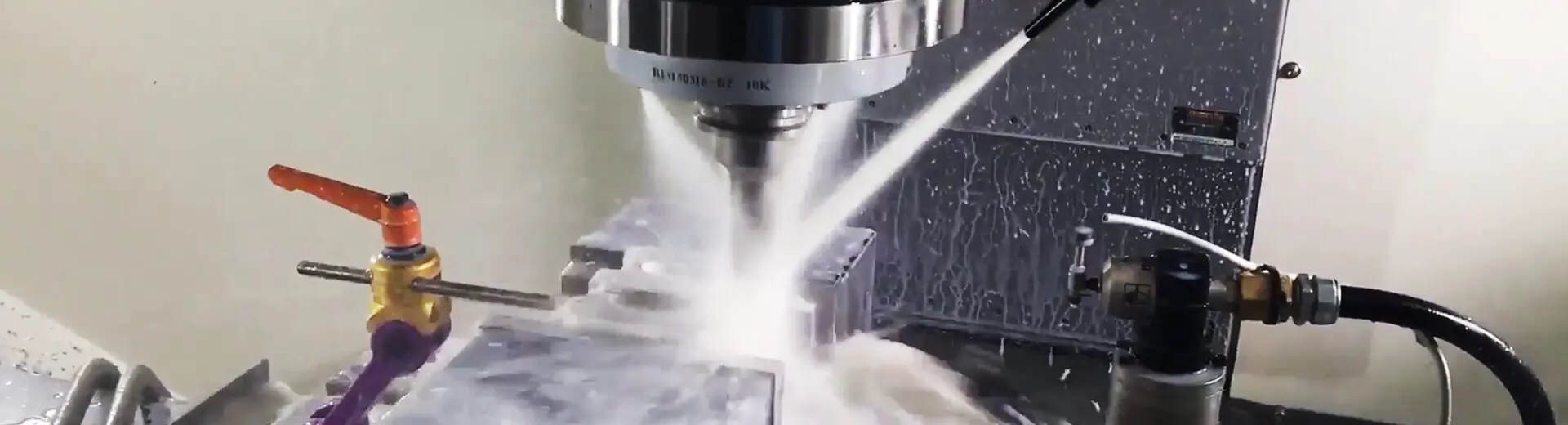

Role of Vises in CNC Machining
 In CNC machining, workholding quality directly affects yield rates and production costs. Unstable or improper clamping can lead to dimensional inaccuracies, poor surface finish, and reduced machining efficiency.
Among various workholding solutions, vises play a critical role. A well-designed vise minimizes vibration and workpiece movement, improving machining accuracy while reducing tool wear. This article explores the role of vises in CNC machining, including their functions, types, and future trends, to help you understand why vises are essential in modern machining environments.
Basic Functions of Vises in CNC Machining
In the CNC machining workflow, the seemingly straightforward act of clamping a workpiece can directly affect machining accuracy, surface integrity, and overall production throughput. The following points highlight the importance of the CNC machine vise by outlining its most critical functions on the shop floor:
Secure Clamping
During CNC machining, cutting tools continuously apply cutting forces to the workpiece. If the clamping force is insufficient, the workpiece may shift or experience micro-movements, resulting in dimensional inaccuracies or even machining failure. A properly selected CNC vise provides stable and evenly distributed clamping force, ensuring the workpiece remains securely fixed even under high-speed machining or heavy cutting conditions.
Precision Positioning
In CNC machining, a vise is responsible for establishing a precise reference relationship between the workpiece and the machine tool, ensuring consistent positioning with every setup. High-precision vises maintain excellent parallelism and perpendicularity, allowing the workpiece to be accurately aligned with the machine’s coordinate system. This level of positioning accuracy is especially critical for parts that require repeat machining or mass production.
Vibration Reduction
Vibration during the cutting process not only affects machining accuracy but also accelerates tool wear and degrades surface finish. A rigid, well-engineered CNC vise can effectively suppress vibrations generated during machining, resulting in smoother cutting operations. This improved stability enhances surface quality while also extending cutting tool life.
Improving Efficiency
In real-world production environments, setup and positioning time often account for a significant portion of total machining time. Vises designed specifically for CNC applications typically feature quick clamping mechanisms and reliable repeatability, significantly reducing the need for manual adjustments. This not only improves efficiency for single-part machining but also delivers greater benefits in mass production and automated machining operations.
Common Types of CNC Vises
Depending on machining requirements, production volume, and the level of automation, different types of vises are used in CNC machining. From traditional manually operated vises to automated solutions that can be integrated into production lines, each type is suited to specific applications. The following sections introduce some of the most common types of vises used in CNC machining:
Mechanical Vises
Mechanical vises generate clamping force through a manually operated screw mechanism. With a simple structure and intuitive operation, they are well suited for single-part machining and small-batch production.Hydraulic Vises
Hydraulic vises use a hydraulic system to deliver stable and consistent clamping force with excellent repeatability. They are ideal for mass production and long-duration continuous machining.Pneumatic Vises
Pneumatic vises use compressed air as their power source and offer a higher level of automation. They are commonly used in environments that require rapid workpiece loading and unloading or integration with automated production lines.Self-Centering Vises
Self-centering vises clamp the workpiece symmetrically from both sides toward a central reference point. They are particularly well suited for round workpieces, symmetric machining operations, and multi-axis CNC machining.Power Vises
Power vises use a clutch-type mechanism to achieve consistent clamping with controlled tightening torque, making them well-suited for operations that require stable workholding and reliable repeatability.Mini Vises
Mini vises feature a compact design and are ideal for machining small or precision components. They offer high practicality in space-constrained setups or tasks that require greater flexibility and precision.Read More: Guide to Vise: Types & Selection Tips
How Do CNC Machine Vises Maintain Stability?
The stability of a vise is not determined by a single design feature. Instead, it results from the combined effects of structural rigidity, clamping mechanisms, and the overall interaction between the vise and the machine table. These factors work together to ensure the workpiece remains firmly secured without shifting or vibration during the cutting process. The following sections explain the key elements that contribute to vise stability in CNC machining:
Firmly Secured to the Worktable
The foundation of vise stability lies in its secure connection to the machine table. CNC vises are typically fastened to the machine table’s T-slots using bolts or screws through mounting holes in the vise base. When properly secured, the vise can effectively withstand lateral cutting forces and machining-induced vibrations, preventing movement or shifting of the vise body during operation.
Rigid Body Structure
To withstand the high loads generated during machining, CNC vises are typically manufactured from high-strength materials, such as ductile iron (e.g., FCD60), and feature a one-piece cast body design. This construction significantly enhances overall rigidity and reduces the risk of deformation under load. As a result, the vise can maintain stable clamping performance even during heavy cutting operations or prolonged machining cycles.
Self-Locking Screw Mechanism
Most vises generate clamping force through a screw mechanism consisting of a lead screw and a nut. When the operator tightens the handle, the threads convert the rotational motion into a linear clamping force. Due to the inherent self-locking property of the screw, the jaws are unlikely to loosen on their own without an opposing external force, ensuring that the clamping force remains stable throughout the machining process.
Jaw Design
Vise jaws are typically made from heat-treated hardened steel, with surfaces often featuring crosshatch patterns or knurled structures designed to increase friction when in contact with the workpiece. This design effectively reduces the risk of workpiece slippage on the clamping surfaces.
Pull-Down Mechanism
In high-precision CNC vises, additional pull-down or wedge-style mechanisms are often incorporated into the design. When the jaws clamp the workpiece, these mechanisms simultaneously generate downward force, pressing the workpiece firmly against the vise bed. This prevents the workpiece from lifting or tilting under cutting forces, further enhancing machining stability and accuracy.
Future Trends of Vises in CNC Machining
As the manufacturing industry moves toward automation and smart manufacturing, the role of vises in CNC machining continues to evolve. Future vises will no longer be merely clamping tools but integral components of overall production systems. They must be able to work closely with machines, automation equipment, and control systems to improve efficiency, reduce labor dependency, and adapt to diverse machining requirements:
Automation and Robotic Integration
Future CNC machining environments will continue to move toward reduced-labor or fully unmanned operation. Vise designs must directly support automation systems and possess high repeatability to coordinate seamlessly with robotic arms. By integrating with automated loading and unloading equipment, vises can perform workpiece clamping and release without manual intervention, enabling production lines to operate stably for extended periods while minimizing downtime.
Power Clamping Systems Becoming Mainstream
The adoption of pneumatic, hydraulic, and electric vises will continue to increase. These power-actuated vises allow clamping and unclamping to be directly controlled by the CNC machine, ensuring consistent clamping force while reducing variations caused by manual operation. For production lines involving mass production or long-duration continuous machining, power-actuated clamping systems help improve overall machining stability and efficiency.
Quick-Change Systems
To address the growing demand for high-mix, low-volume production and frequent changeovers, quick-change workholding solutions and zero-point locating systems are becoming an important trend. These systems allow operators to replace different vises or fixture plates in a short amount of time and quickly return to established machining references, significantly reducing changeover time while improving overall machine utilization.
FAQ
Q1. Is it mandatory to use a vise for CNC machining?
Not necessarily. However, in most milling, drilling, and general CNC machining operations, vises are one of the most stable and efficient workholding solutions. For parts with regular shapes or high production volumes, vises provide reliable positioning accuracy and repeatability.
Q2. How to choose the right CNC vise?
Consider factors such as workpiece size, machining method, production volume, and automation requirements. For mass production or automated production lines, hydraulic or pneumatic vises are worth considering. For small or precision workpieces, precision or mini vises would be suitable choices.
Conclusion
From secure clamping and accurate positioning to vibration damping and reduced setup time, the design and quality of CNC vises often determine whether a CNC machine can fully deliver its machining capabilities. As machining environments continue to evolve toward automation, smart manufacturing, and multi-axis machining, the importance of vises continues to grow.
Under these industry trends, selecting a vise that balances precision, stability, and practical application has become an essential consideration in CNC machining. AUTO SUPER is a professional manufacturer specializing in vises and related accessories. For machining applications involving high-precision positioning, multi-axis machining, or automation, AUTO SUPER’s self-centering vise SCV127 is a suitable choice.
The SCV127 features a self-centering design that ensures workpieces are clamped based on a central reference, with repeat positioning accuracy maintained within ±0.01 mm. It is particularly well suited for four-axis and five-axis CNC machines, rotary tables, and both vertical and horizontal CNC milling machines. If you have any questions regarding vises, feel free to contact AUTO SUPER to build a stable and reliable foundation for your machining processes.
